From Idea to Impact
A founder conversation with Vaibhav (Inka), hosted by Questing Minds and Entrepreneurs Cafe.
Some sessions give you motivation. This one gave people language for decisions they have been struggling with for years: when to leave home, how to handle money in your 20s, what “selling” really means, and why brand values are not a poster on the wall but a set of choices you repeat when it is inconvenient.
Quick read: what you will take away
- Why moving to a high-pressure professional city early can upgrade your operating system
- How lifestyle inflation silently kills compounding
- A simple way to sell without sounding salesy: start with the need
- Why brand trust is built through consistent trade-offs, not marketing
- A team incentive twist that prevents customer abandonment
- How Tier-2 cities give founders a real edge: time, focus, and cost
- The fundraising reality check: execution beats ideas, early cheques come from trust
Seven ideas, each one the kind of thing you wish someone had told you at 22.
About the guest
Vaibhav has spent over two decades across India’s financial and insurance space, with leadership roles at HDFC Life, DBS, Macquarie, and ICICI Prudential. He also co-founded Mahila Money and now leads Inka. The session blended operator experience with founder honesty, which is why it hit differently.
The story arc: from comfortable to capable
Vaibhav shared that, post MBA, he was content getting a job in Jodhpur. It made sense. It was familiar. It was safe.
Then came a push that changed the trajectory: move to Bombay and learn how the corporate world actually works. He described Bombay as a place that forces exposure, pace, and professionalism. In his words, “If you want to learn business, that’s the only city you need to spend time in.”
Years later, the seed for Inka did not come from a fancy pitch deck moment. It came from something painfully normal: a school WhatsApp group argument about mis-sold insurance.
Instead of treating it like noise, he treated it like signal. He listened. He met people. He asked what exactly went wrong. He noticed a pattern: insurance is rigid, technical, and intimidating for regular users, especially in moments when they need clarity the most.
That is where the startup direction sharpened: build something that owns the customer journey and reduces friction.
The best startup ideas are not invented. They are noticed. Vaibhav found his in a WhatsApp argument.
The playbook: 8 lessons worth keeping
1. Growth requires a new environment, not just new intentions
If you stay in the same environment, you often keep the same thinking loops. Vaibhav’s point about moving early was not “metros are superior.” It was about what a high-exposure environment does to your standards.
You learn what “good” looks like faster. You see how decisions get made. You get corrected quickly. That feedback loop is a cheat code.
If you are in your 20s and debating whether to try the bigger city once, this was your nudge: comfort is expensive.
2. Your 20s can either buy you status or buy you freedom
The personal finance part of the session was blunt, and that bluntness was useful.
He spoke about the trap of gadget upgrades, luxury spends, and credit-card living. It looks harmless because it is normalised. But the cost is not the phone or the shoes. The cost is the years of compounding you lose.
He gave a memorable image: “living a Bruce Wayne lifestyle without Bruce Wayne’s money.” Funny line, serious point.
The underlying message was simple: spend, but do not let spending become your identity. Save early, invest early, and let time do what effort cannot.
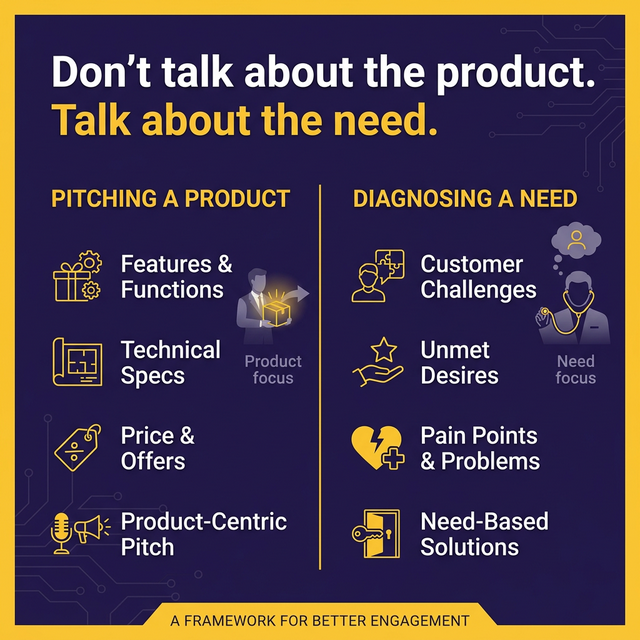
3. Selling is not persuasion. Selling is diagnosis.
This was one of the strongest segments, because it reframes sales for founders who hate “sales.”
Vaibhav kept coming back to a principle: “Don’t talk about the product. Talk about the need.”
The famous “sell me this pen” question is usually answered with features. He argued that features are the last step, not the first. Start with questions: who are you, what do you do every day, what problem are you solving right now, why does it matter?
A teacher buying a pen and a doctor buying a pen are buying different outcomes. Once you understand the outcome, you only need two or three features that connect directly to that need.
If your pitch feels like people are not listening, it is often because you are talking about your product before you have earned the right to.
Features are the last step. The first step is understanding what outcome the person is actually buying.
4. Brand is a set of decisions you do not reverse
He described brand as something you protect like a core value, not something you “market into existence.”
He used the Alphabet vs Meta comparison to show how deeply a company’s philosophy shapes everything it does. One lane prioritises user trust and long-term utility. Another prioritises aggressive monetisation and investor returns.
His point was not that one is good and the other is bad. His point was that you cannot switch lanes based on mood. Brand trust is built when people can predict your behaviour even when money tempts you.
He put it simply: “Brand is your baby.” If you compromise it for short-term gains, you might get revenue today and lose trust tomorrow.
5. Culture is not a slogan. It is what happens when nobody is watching.
“Culture eats strategy for breakfast” came up for a reason. Strategy can be rewritten. Culture shows up every single day in small decisions, especially in hiring.
One practical hiring insight from the session: attitude beats raw intellect if the intellect comes with toxicity.
A toxic high performer can demotivate an entire team. A healthy team can coach up skill gaps. This is a hard lesson most founders learn late, usually after one bad hire creates a long recovery period.
6. Design incentives to protect the customer, not the individual
One of the most interesting operational choices shared was how the business thinks about incentives.
Instead of a traditional “sales team,” the model uses a Customer Service Team. Individual commissions are replaced with shared targets.
Why? Because individual targets create a predictable failure mode: customers get “owned” by one person, and when that person is absent, the customer gets abandoned. Team-based ownership protects continuity, reduces internal competition, and keeps the service experience stable.
Design incentives so the customer never pays for internal politics.
7. The Tier-2 advantage is real, and mostly invisible
This part was especially relevant for the community in the room.
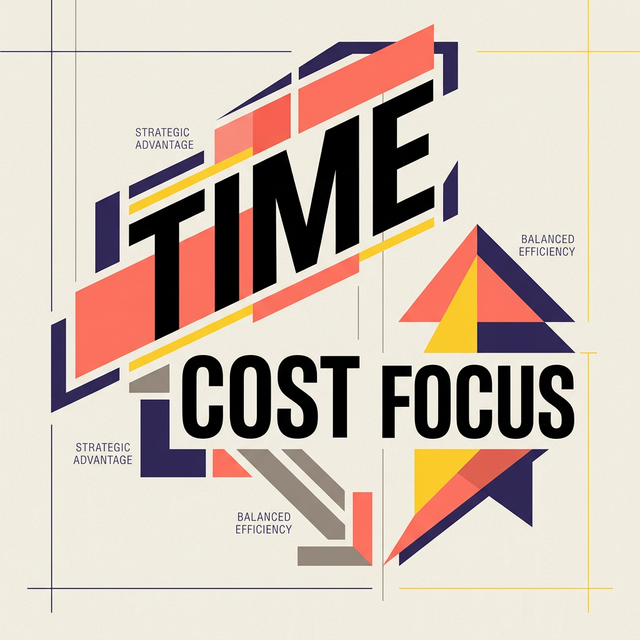
Vaibhav made a simple claim: building from Tier-2 cities gives you time, and time is the most important currency.
Less commute. Lower rent. Lower burn. More focus. More runway for experiments.
He even called out metro office rents as a constant pressure that forces rushed decisions. In a Tier-2 setup, you can afford to think, test, and iterate without panic.
Post-COVID remote pitching also changes the game. Investors are more open to online meetings, which reduces the disadvantage that used to come from geography.
If you are building from a Tier-2 city, your job is not to apologise for it. Your job is to use the advantage properly.
Time, cost, and focus. Tier-2 cities give you all three. The only thing you need to add is ambition.
8. Fundraising reality: investors back founders, not ideas
This is where the room usually gets quiet.
Vaibhav’s line was sharp: “Ideas are 8 billion in population. Execution is the difference.”
Ideas are cheap because everyone has them. Execution is rare because it requires consistency, resilience, and speed of learning.
He also said something many early founders underestimate: your first cheques usually come from people who know you, or people who trust your track record.
So if you are preparing for fundraising, focus on two things: show proof that you can execute, and build trust before you need money.
Frameworks worth stealing
Dual goal-setting
Have two goals running in parallel: a specific 5 to 7-year goal (something tangible) and a broader 15-year aspiration (your bigger identity arc). The tangible goal keeps you grounded and disciplined. The long vision keeps you inspired when the short-term gets messy.
A simple way to think about product-market fit
Vaibhav described PMF like an input-output relationship. If increasing your input (marketing, distribution effort) increases your output proportionally (traction, revenue), you are seeing early signs of fit. If doubling input does not change output, you do not have PMF. You have noise.
Founder-market fit comes before product-market fit
Before you chase PMF, ask if you have founder-market fit: deep industry understanding, insider edge, or a unique advantage. If you do not, your learning curve becomes your biggest competitor.
PMF is not a feeling. It is a ratio. Input goes up, output goes up. If it does not, keep searching.
Mistakes to avoid
- Treating lifestyle upgrades as progress
- Using credit cards to fund an identity you cannot afford
- Delaying investing and missing compounding years
- Under-insuring yourself because “nothing will happen”
- Hiring a toxic top performer and calling it high standards
- Building a business where you never own the customer lifecycle
Closing thoughts
This conversation did not glorify hustle. It glorified clarity.
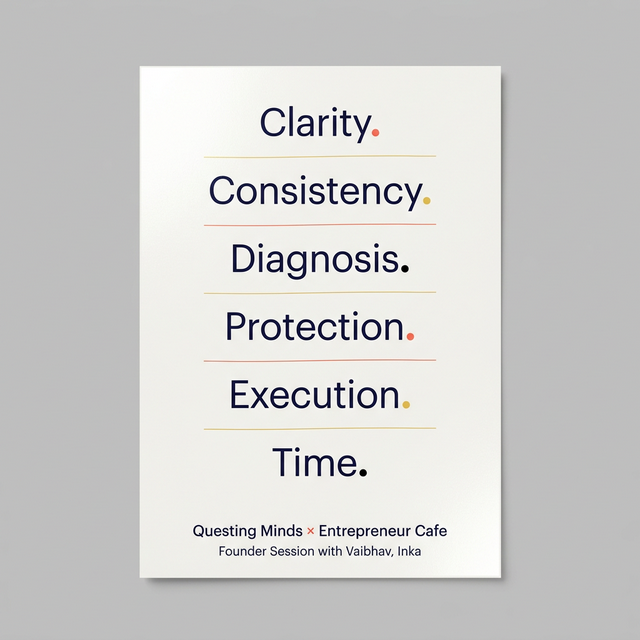
Clarity about money. Clarity about values. Clarity about what customers actually need. Clarity about culture. Clarity about execution.
The biggest theme was consistency: your career, your brand, and your company become what you repeat.
Discussion prompts for the community
- What is one money habit you wish you started at 22?
- When you sell, do you start with the need or the features?
- If you are building from a Tier-2 city, what is your biggest advantage right now: time, cost, or focus?
About the people behind this session ↓
Questing Minds
A community for people in their 20s, based in Jodhpur and founded by Chirag Mirchandani. Since launching, Questing Minds has hosted 20+ meetups for 80+ curious minds from all sorts of backgrounds — students, working professionals, early founders, and people still figuring it out. The mission: a creative, collaborative space where it is okay to mess up, as long as you learn and grow. Tagline: "Keep curiosity alive!"
Instagram · Chirag on LinkedIn
Entrepreneur Cafe
A global community-led platform for founders, entrepreneurs, and innovators. Registered as a non-profit in India, Entrepreneur Cafe runs pitch-free events where founders share honest, unscripted experiences — no sales pressure, no scripts. Chapters are run by appointed City Mayors across cities worldwide. The Jodhpur chapter is led by Deepesh Dhariwal. Tagline: "let's discuss ideas."
Website · LinkedIn · Deepesh on LinkedIn
Inka
India's personalised insurance platform, founded by Vaibhav Kathju, Abhay Singh, and Gaurav Gupta. Formerly InsurancePadosi, rebranded as Inka in March 2025. The Inka Insurance Report asks simple questions about your life and delivers a personalised insurance blueprint in under a minute. 75,000+ registered users across 12,000+ pin codes.
Instagram · LinkedIn · Vaibhav on LinkedIn · X